French Language Classes Near Me for Adults: Options, Practical Information, and Local Tips

Finding French classes for adults near you is easier than it sounds. Start with the format that fits your week, then compare what each option offers. In Canada, Language International alone lists 37 French courses for adults, so choice isn’t the problem. Narrowing it down is.
Your options fall into three broad groups. In-person classes at a local school, like Mosaic academy, a private career school in Orleans that offers French courses for adults. Live online programs, which provide 7.5 to 15 hours of live French classes per week. And free training, such as the online French language courses from Bonjour Francophonie for adults.
Most adults who sign up have a clear reason. A promotion, a move to a bilingual workplace, a trip to Québec, or simply the pleasure of finally saying “enfin, je comprends!” in a café. Whatever your goal, the best class is the one that matches your level, your schedule, and the way you like to learn.
Below, we walk through seven programs, the criteria we used to pick them, and the practical details you’ll want before you enrol. Bienvenue, and bonne chance!
Why Adults Across Canada Are Signing Up for French Classes
Learning French as an adult is a practical choice in a country with two official languages. Many Canadians study it to open doors at work, since bilingual skills can matter for roles in education, customer service, government, and beyond. Others want to connect with Francophone neighbours, friends, or family, and to enjoy the music, films, food, and traditions that make French culture so rich. Some simply love planning a trip to Quebec or abroad and want to order their café au lait with confidence. And for plenty of adults, it’s just fun to try something new.
If you’re worried you’ve left it too late, don’t be. Adults bring real strengths to language learning: clear goals, life experience, and the discipline to keep showing up. Complete beginners are welcome to start from “Bonjour!”, and returning learners who studied French in school years ago often find it comes back faster than they expect.
The biggest challenge for most adults isn’t ability, it’s time. That’s where personalized learning makes a difference. When lessons are shaped around your goals, your pace, and your schedule, French can fit around work, family, and everything else on your plate. You might focus on workplace conversation, travel phrases, or simply building confidence, and the lessons follow your lead.
How We Chose These French Class Options
We grouped these options by the things adults tend to care about most. First, format: in-person classes, live online programs, and private one-on-one lessons each suit different routines. Second, suitability for adults, so we looked for courses designed with grown-up learners in mind. Third, how personalized the experience feels, from small groups to lessons built around your own goals. Fourth, schedule flexibility, since most of us are juggling work, family, and life. Finally, cost approach, because some training is free while other programs are paid.
Everything here comes from publicly listed program information, so think of it as a friendly starting point rather than a final word. Details like availability and admission requirements can change and vary by provider. Before you commit, reach out to each school or program directly and confirm what’s current.
Types of French Language Learning Programs for Adults Near You
1. Private One-on-One French Lessons
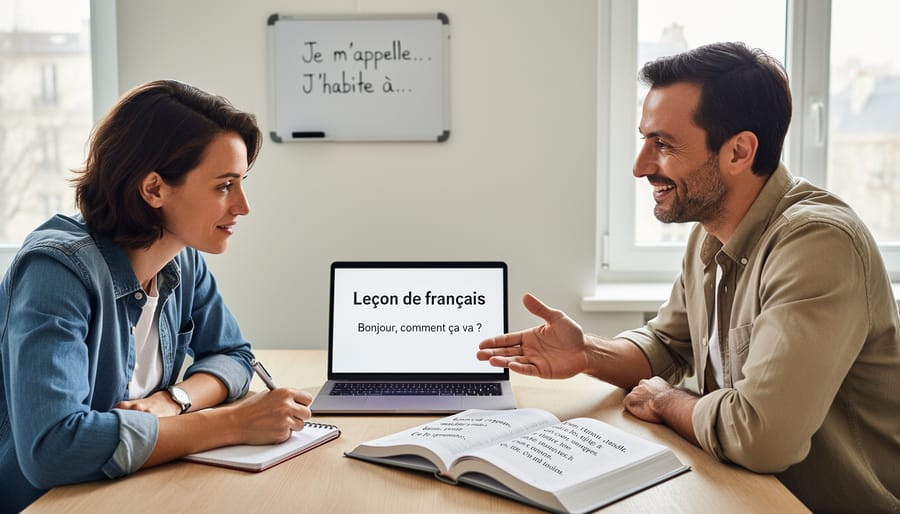
Private one-on-one lessons are the most personal way to learn French. Everything is built around you: your goals, your pace and the topics you actually care about. If you need French for a job interview, a move to Montréal or a family reunion, your lessons can head straight there.
That focus is exactly why the French Educational Organisation in Canada centres its teaching on private lessons led by professional educators. Your teacher can adjust on the spot, slowing down when something is tricky and moving ahead when you’re ready. If you’re weighing formats, our guide on One-on-one vs semi-private lessons can help you decide.
Private tuition tends to suit busy professionals who need flexible scheduling, nervous beginners who’d rather build confidence away from a crowd, and anyone aiming at a specific goal. Here’s how it compares with the other options in this guide:
| Program type | Best suited for | Personalization | Confirm with the provider |
|---|---|---|---|
| Private one-on-one | Busy professionals, beginners, goal-driven learners | Highest | Schedule and lesson format |
| Semi-private | Friends or partners learning together | High | Group size and pairing |
| Live online programs | Learners without a convenient local class | Moderate | Weekly live hours |
| Career school courses | Learners who prefer in-person classes | Varies | Course details and requirements |
Whichever route you choose, a little French each week adds up. Petit à petit, l’oiseau fait son nid.
2. Semi-Private French Tuition
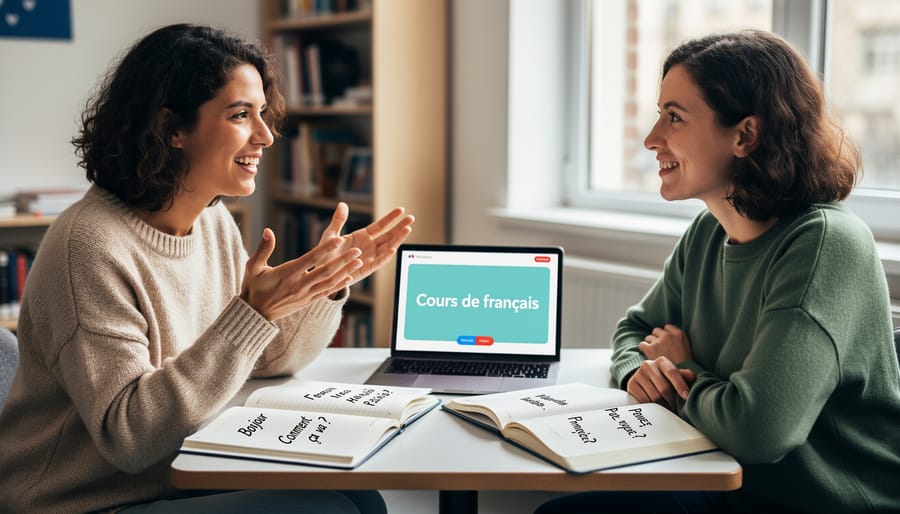
Semi-private lessons sit nicely between one-on-one tuition and a full classroom. You learn alongside a partner or a friend, so you get small-group energy without losing the individual attention that helps you improve.
Having someone next to you changes the experience. You share the motivation, and it’s easier to show up when a classmate is counting on you. Conversation practice also feels more natural, because you can chat, ask each other questions, and laugh through the awkward moments together. Many adults find that format more social and a lot less intimidating.
Your teacher still tailors the lesson to the pair, adjusting pace, topics, and corrections as you go. If you enjoy talking things through with someone, this option may be a great match. Not sure which style suits you best? It helps to see which format truly fits your learning style before you commit. Allons-y!
3. Live Online French Programs
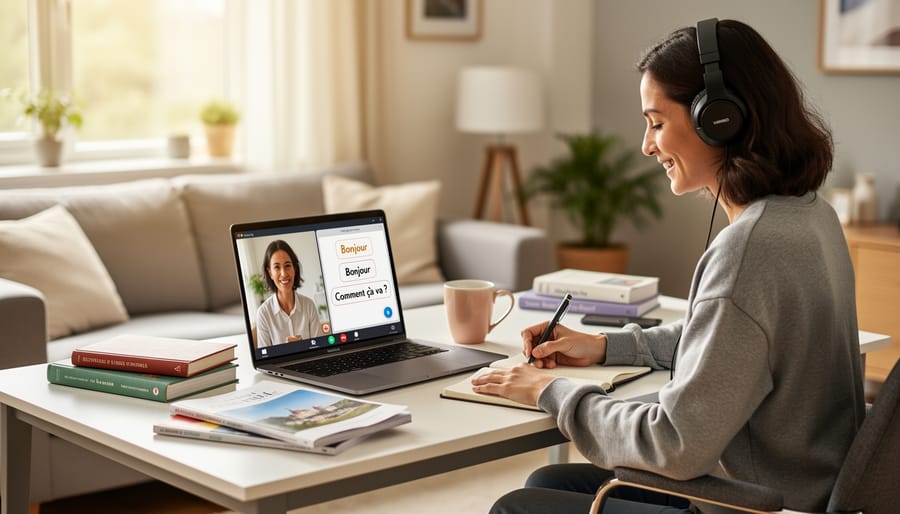
If you can’t find a convenient class nearby, live online programs let you learn French from home without giving up the structure of a real classroom. The French online programs provide students with 7.5 to 15 hours of live French classes per week. That is a substantial amount of guided time with an instructor, and it could mean faster progress for learners who want to build confidence quickly.
Live classes matter because you speak, listen, and get corrected in the moment, which is hard to replicate with apps alone. More hours each week means more repetition, and repetition is what helps new words and sentence patterns stick. Of course, the right pace depends on your goals and your schedule, so it’s worth being honest about how much time you can commit.
Many adults also find that learning online keeps things flexible and personal. It helps to choose the right online format for how you like to learn. Confirm current details directly with the program before you enrol.
4. Free Online French Training for Adults

Not ready to commit to a paid course yet? A free option can be a lovely place to start. Bonjour Francophonie offers free online French language training for adults, which makes it a welcoming first step if you’re on a budget or simply want to test the waters before investing more time or money.
Learning online from home also means you can work French into your own routine, whether that’s a quiet morning coffee or a lunch break. If you’re curious about other low-cost routes, there are many ways to learn French for free in Canada, from structured programs to everyday practice.
Because details can change, be sure to check with Bonjour Francophonie directly for current information on what’s offered and how to join. Un petit pas, et vous voilà lancé!
5. Career School French Courses: Mosaic Academy in Orleans
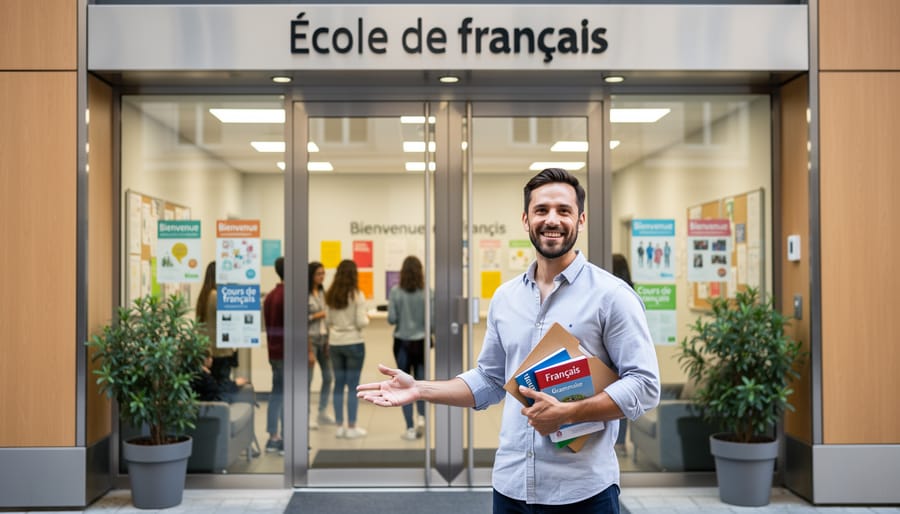
If you prefer learning in a real classroom, Mosaic Academy in Orleans is worth a look. It’s a private career school that offers French courses for adults, located at 2425 St Joseph Blvd., Orleans, K1C 1E9.
An in-person career school setting can suit adults who focus better away from home, enjoy face-to-face conversation, or like having a set place and routine to anchor their studies. If your days are full of screens already, stepping into a classroom might feel like a refreshing change. It can also appeal to learners who want to practise speaking aloud with an instructor and classmates right there in the room.
Course details can change, so it’s best not to assume what’s on offer. Before you plan around it, contact the school directly to ask about current French courses, schedules, and anything you’d need to enrol. A quick call or message is the easiest way to get accurate answers. Bonne chance!
6. Community and General Language Courses

If you’re curious about language learning in general, a broader course can be a gentle way to start. Brooks Learning offers a course called “Learn Another Language,” which may suit adults who want to explore the idea of picking up a new language before committing to one path.
Because the name is general, it’s worth asking the provider two simple questions before you sign up. First, does the course actually cover French? Second, how is it structured, in terms of format, weekly time, and level? Availability can vary, so contact them directly for current details.
Think of it as a first step, a way to build confidence and habits you can carry into more focused French lessons later.
7. French Schools Across Canada: Courses for Every Season

If you like the idea of a bigger, more immersive experience, it’s worth browsing the French schools listed across Canada. Language International, for example, lists 78 French courses at French schools in Canada. Of those, 37 are listed for adults, and 66 are summer French courses, which could suit you if you’d rather learn when your schedule opens up.
These numbers show how wide the range is, but they’re listing counts, not guarantees that a spot is open. Availability and admission requirements vary, so confirm details with each school directly. Take your time comparing formats, lengths, and styles. Bonne exploration!
Practical Information: What to Check Before You Enrol
Choosing a French class is easier when you know what to compare. Before you sign up anywhere, take a little time to look at the details that shape your day-to-day experience.
Start with format and weekly hours. Some programs run in person, while others are live online. For example, French online programs provide 7.5 to 15 hours of live French classes per week, which is a lot more intensive than a single evening class. Think honestly about how much time you can give. Next, consider location. A school near your home or office saves time, but an online class can suit a packed schedule, especially if no convenient option is close by.
Cost matters too. Options range from free online training, like the adult courses at Bonjour Francophonie, to paid private and career school programs. Also look at the learning tools a provider uses, and our guide to French learning materials can help you judge what’s worth having.
Here’s a quick checklist of questions to ask any school or tutor:
- Is the class in person, online, or a mix of both?
- How many hours per week does the program involve?
- Will you assess my level before placing me in a class?
- How large are the classes, and how much individual attention do I get?
- Which instructors teach, and what is their experience?
- What materials are included, and what do I need to buy?
- What are the cancellation and rescheduling policies?
- Is there a trial lesson or a way to test the class first?
Availability and admission requirements vary by provider, so confirm them directly before you commit. The details shared in this article come from public program listings, so it’s always wise to double-check current information with each school.

Local Tips for Finding and Getting the Most from Your French Classes
Finding the right French class starts close to home, so try searching with your city name plus “French classes for adults” and see what comes up. You might be surprised by how many choices appear, from small schools to online programs you can join from your kitchen table.
Mixing formats works beautifully. Pair a live online class with a bit of in-person practice, and you get flexibility without losing that human connection. Set weekly goals you can actually keep, like two short study sessions and one conversation, rather than an hour a day that quickly feels heavy.
Then let Francophone culture do some of the teaching. Listen to French music on your commute, watch a film with subtitles, or tune in to a podcast while you cook. Keep an eye out for community events where French is spoken, since a casual chat over coffee teaches things no textbook can.
Above all, be patient with yourself. Progress comes in small, steady steps, and every new word is worth celebrating. When the going gets tough, remember: “Petit à petit, l’oiseau fait son nid” (little by little, the bird builds its nest). Courage, you’ve got this!
Frequently Asked Questions About French Classes for Adults
Can complete beginners join adult French classes?
Yes, many programs welcome learners at every level, though policies differ by provider. Check directly with the school or tutor about level placement.
Is online learning as effective as in-person?
It can be, especially with live classes. Some online programs offer 7.5 to 15 hours of live French each week.
Are there free options?
Yes. Bonjour Francophonie offers free online French training for adults.
How do private lessons differ from group classes?
Private lessons are tailored to your goals and pace, while group classes offer shared practice and a more social feel.
Whatever format you pick, steady practice matters most. Quelques minutes par jour, a little each day, adds up fast.
Whether you picture yourself in a one-on-one lesson, practicing with a partner in a semi-private class, joining a live online program, studying at a career school like Mosaic Academy, or exploring a community course, there’s a path that fits your life. Many adults start with a free option such as Bonjour Francophonie, then move toward something more tailored as their confidence grows.
The best class is the one you’ll actually show up for. So pick one option, confirm the details directly with the provider, and take that first small step this week.
If you’d like lessons shaped around your own goals and pace, we’d love to welcome you to explore personalized French lessons with the French Educational Organisation in Canada. Every learner starts somewhere, and every “bonjour” counts.
Bonne chance et bon apprentissage!