The Interactive Tools That Will Transform Your French Learning Journey
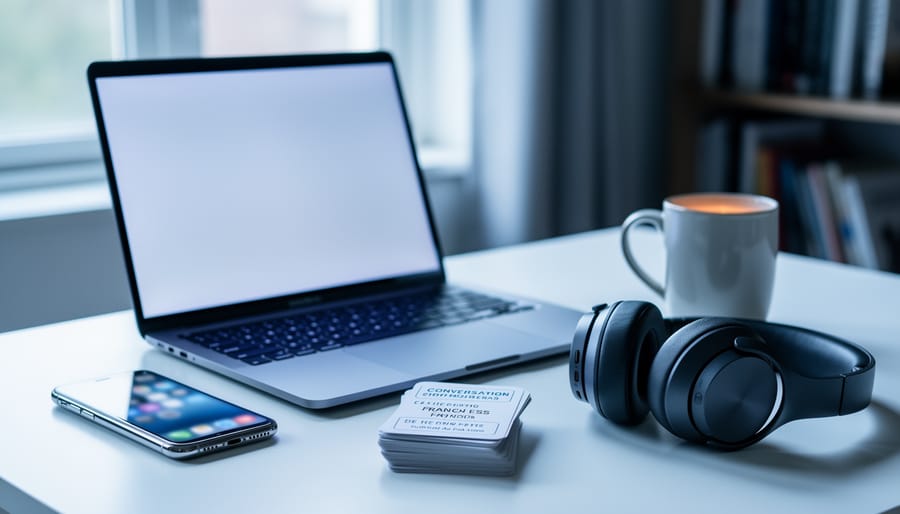
Learning French in 2026 means choosing from dozens of digital platforms, apps, and resources, but the real challenge isn’t finding tools. It’s finding the right combination that matches how you actually learn and keeps you engaged beyond the first enthusiastic week.
The path to advanced French fluency requires more than downloading popular apps. You need tools that address different skills: one resource might excel at building vocabulary through spaced repetition, while another immerses you in authentic Québécois conversations. The most successful learners layer multiple tools strategically rather than searching for a single perfect solution.
Canadian French learners face unique considerations. You might need resources that recognize Québécois pronunciation and expressions, or you may be preparing for specific proficiency tests required for employment or immigration. Your choice of tools should reflect these practical goals while celebrating the richness of Francophone culture across Canada and beyond.
This guide categorizes learning tools by their primary function, from vocabulary builders and grammar platforms to conversation apps and cultural immersion resources. You’ll discover which tools work best for different learning stages, how to combine them effectively, and how to avoid the common trap of collecting resources without actually using them. Whether you’re starting from zero or refining existing skills, the right toolkit makes consistent progress achievable within your daily routine.
Why Interactive Tools Matter for Canadian French Learners
Canada’s bilingual landscape creates unique demands for French learners that interactive tools are perfectly positioned to address. Whether you’re aiming for government positions, expanding professional opportunities, or simply connecting with Francophone communities across the country, mastering French opens doors in Canada that remain closed to unilingual speakers. Interactive tools offer immediate, on-demand practice that fits into the irregular schedules most Canadians juggle between work, family, and other commitments.
The real power of these tools lies in their ability to provide consistent exposure to the language between your personalized lessons. You might meet with an instructor once or twice weekly, but interactive tools fill the remaining days with meaningful practice that reinforces what you’re learning. This constant engagement prevents the forgetting curve that plagues learners who only study during scheduled sessions.
For Canadian learners specifically, these tools solve the cultural immersion challenge. You don’t need to travel to Quebec City or Montreal to hear authentic French conversation. Interactive platforms bring native speakers, real-world scenarios, and cultural context directly to your phone or computer. They let you practice Canadian French expressions alongside international French, preparing you for the diverse Francophone communities you’ll encounter across the country.
Perhaps most importantly, interactive tools adapt to your current level and learning pace. Unlike classroom settings where you might feel rushed or held back, these resources adjust their difficulty based on your performance. This personalization complements the tailored approach of one-on-one instruction, creating a comprehensive learning ecosystem that respects your individual journey toward fluency while maintaining the irreplaceable value of human guidance and cultural mentorship.
Digital Language Learning Platforms
Immersive Language Apps
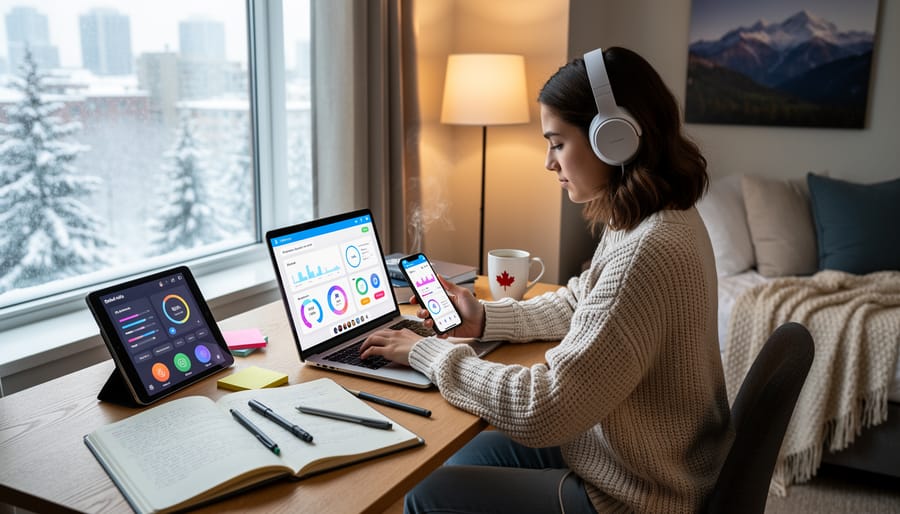
Immersive language apps have transformed how Canadians approach French learning, turning daily commutes and coffee breaks into productive study sessions. These comprehensive platforms combine game-like progression systems with sophisticated technology to keep you engaged while building real language skills.
The best apps for Canadian learners go beyond simple vocabulary flashcards. They create complete learning ecosystems where you earn points for daily practice, unlock new levels as you progress, and receive immediate feedback on your pronunciation through voice recognition technology. This instant correction helps you develop authentic French sounds rather than reinforcing incorrect patterns, which is particularly valuable if you’re aiming for professional bilingualism.
Adaptive learning algorithms represent a significant advantage of modern apps. The software tracks which grammar concepts you’ve mastered and which words you consistently struggle with, then adjusts your lessons accordingly. If you breeze through passé composé but stumble over subjunctive mood, the app recognizes this pattern and provides targeted practice where you need it most.
When evaluating immersive language apps for your French learning journey, look for these essential features:
- Voice recognition that provides specific feedback on pronunciation and accent
- Adaptive algorithms that customize lessons based on your progress and weak points
- Contextual vocabulary building that teaches words within phrases and sentences
- Grammar explanations integrated naturally into practical exercises
- Offline functionality for learning during commutes or travel
- Progress tracking that shows measurable improvement over time
The gamification aspect shouldn’t be dismissed as mere entertainment. Earning streaks, competing on leaderboards, and celebrating milestones creates genuine motivation that keeps you practicing consistently. Language acquisition requires regular exposure over months and years, and these psychological rewards help maintain the discipline needed for long-term success.
Most quality apps offer Canadian French options alongside European French, allowing you to learn the expressions and pronunciation you’ll actually encounter in Montreal, Ottawa, or Vancouver workplaces. This specificity matters when your goal is functional bilingualism in a Canadian context rather than tourist-level conversation.
Specialized Vocabulary Builders
Building a robust French vocabulary requires more than casual exposure, it demands deliberate practice with tools designed around how memory actually works. Specialized vocabulary builders leverage cognitive science principles, particularly the fact that spaced repetition improves retention by reviewing words just before you’re likely to forget them.
Flashcard apps like Anki and Quizlet remain popular for good reason. They let you create custom decks tailored to Canadian contexts, think “dépanneur,” “magasinage,” and workplace terminology specific to bilingual environments. The algorithms adjust review intervals based on your performance, focusing your effort where it’s needed most rather than wasting time on words you’ve already mastered.
Visual association tools take a different approach by pairing French words with memorable images and context clues. Apps like Memrise and Drops use vibrant illustrations and short micro-lessons that make vocabulary stick through visual memory. This method works particularly well for concrete nouns and common verbs, helping you recall “la poubelle” when you see the image rather than translating from English each time.
Context-based vocabulary builders integrate new words within full sentences or short stories rather than isolated terms. Tools like Clozemaster and LingQ present authentic French content where you learn vocabulary through reading and listening, seeing how words actually function in conversation and written communication. This approach builds comprehension alongside vocabulary, preparing you for real-world usage.
These tools work best as supplements to structured lessons rather than standalone solutions. Use them for daily practice between your regular instruction, ten minutes of spaced repetition each morning reinforces what you’re learning in class while expanding your working vocabulary. The combination of systematic review through these apps and contextual application in guided lessons accelerates your progress toward genuine fluency.
Interactive Pronunciation and Conversation Tools
Voice Recognition Technology
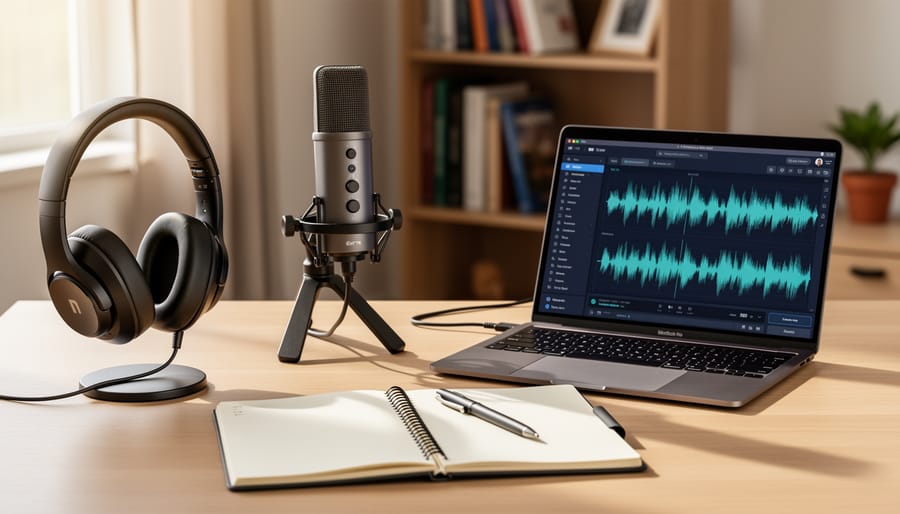
Modern voice recognition technology has become remarkably sophisticated, offering French learners the kind of immediate pronunciation feedback that used to require a live tutor. These tools analyze your spoken French in real-time, pinpointing exactly where your accent needs adjustment and which sounds you’re not quite nailing yet.
The real power lies in specificity. Instead of a vague “try again,” quality speech recognition tools break down your pronunciation at the phoneme level. They’ll catch the subtle difference between your attempt at the French “r” and the authentic uvular sound, or flag when you’re accidentally anglicizing your vowels. Some platforms even provide visual feedback through waveform comparisons, showing you how your pronunciation differs from native speech patterns.
For Canadian learners juggling work, family, and language goals, this technology offers something invaluable: unlimited practice opportunities without scheduling constraints. You can drill difficult sounds at midnight or during your lunch break, getting consistent automatic speech recognition feedback every single time.
The accent and intonation analysis features deserve special attention. French isn’t just about pronouncing individual words correctly, it’s about capturing the rhythm and musicality of the language. Advanced tools track your sentence-level intonation, helping you develop that natural French flow rather than speaking in choppy, translated-from-English phrases.
These tools work best when you use them between your personalized lessons. Practice the specific sounds or phrases your instructor identifies as challenges, then bring your improved pronunciation to your next conversation. It’s like having a patient pronunciation coach available whenever you need one, complementing the cultural context and conversational nuance that only human interaction provides.
AI Conversation Partners
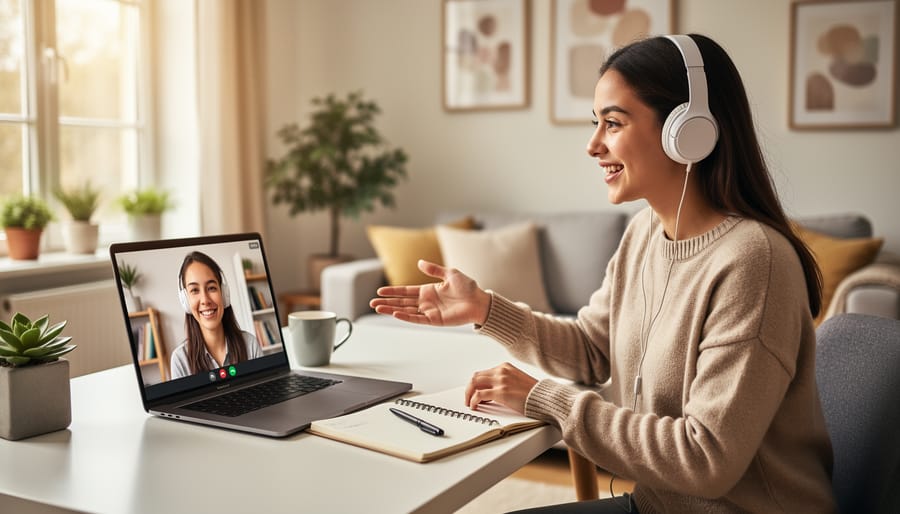
AI-powered conversation partners have emerged as game-changing practice tools that let you stumble through dialogue, make mistakes, and try again without the pressure of a live conversation. These virtual chatbots simulate real discussions on topics ranging from ordering coffee to debating Canadian politics, giving you unlimited opportunities to practice the back-and-forth rhythm of natural French conversation.
The beauty of AI conversation tools lies in their infinite patience. You can repeat the same exchange five times until you nail the correct verb conjugation, or pause mid-sentence to look up vocabulary without worrying about awkward silences. Most platforms adapt to your proficiency level, starting with simple greetings and progressively introducing more complex language structures as you improve. Some even recognize regional variations, helping Canadian learners practice both Québécois expressions and international French.
Modern AI conversation partners now incorporate voice recognition, allowing you to practice speaking aloud rather than just typing responses. This dual functionality builds both written and oral communication skills simultaneously. You’ll receive immediate corrections on grammar mistakes and suggestions for more natural phrasing, creating a safe space to experiment with new vocabulary without fear of judgment.
The technology excels at providing consistent practice between formal lessons. While AI can’t replace the nuanced feedback and cultural insights a human teacher offers, it fills the practice gap beautifully. You can chat for five minutes while waiting for your coffee or engage in longer conversations when your schedule allows, creating flexible learning opportunities that fit your life.
Cultural Immersion Through Multimedia Tools
Streaming Content with Learning Features
Streaming platforms offer an invaluable bridge between classroom learning and real-world French use. Services like Radio-Canada’s Gem, TV5MONDEplus, and Netflix’s French-language catalogue provide authentic content with interactive features specifically designed for learners.
Start with shows that match your current level. Enable French subtitles rather than English ones, a technique that trains your brain to connect spoken and written French simultaneously. Most platforms now offer playback speed controls, letting you slow dialogue to 0.75x speed while your ear adjusts to natural conversation rhythms. As comprehension improves, gradually increase to normal speed.
Podcasts designed for French learners, such as those from Radio-Canada or France Culture, often include transcripts you can follow along with. This combination of listening and reading reinforces pronunciation patterns and vocabulary retention far more effectively than either method alone.
The key is consistency over perfection. Watch a 20-minute episode three times: first with French subtitles to grasp the story, second without subtitles to challenge comprehension, and third to enjoy the content while noting new expressions. This layered approach transforms passive entertainment into active skill-building, exposing you to regional accents, cultural references, and contemporary language that textbooks cannot capture.
Virtual Cultural Experiences
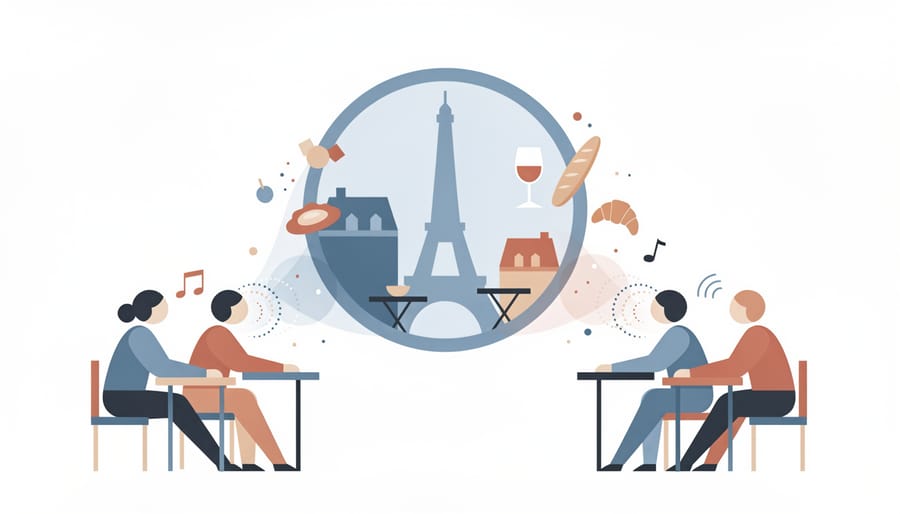
Virtual museums, online cultural events, and interactive community platforms now bring Francophone culture directly to your screen, offering experiences that once required travel. These tools transform language practice from an isolated exercise into meaningful cultural engagement.
Google Arts & Culture hosts virtual tours of Montreal’s Musée des beaux-arts and Quebec City’s Musée de la civilisation, allowing you to explore exhibits while reading descriptions entirely in French. Navigation menus, exhibit captions, and audio guides provide real-world vocabulary around art, history, and cultural heritage. You’ll encounter the same language used by Francophone curators and historians, not textbook examples.
Zoom-based cooking classes taught by chefs from Quebec and France combine hands-on learning with casual conversation. As you prepare tourtière or tarte Tatin, instructors explain techniques in French while participants ask questions, creating authentic dialogue around familiar activities. The shared experience removes the pressure of formal conversation practice.
Eventbrite lists virtual book clubs, wine tastings, and discussion groups hosted by Francophone organizations across Canada. These gatherings connect you with native speakers and fellow learners who share specific interests, whether Quebec literature or French cinema. The relaxed format encourages participation while exposing you to regional accents, colloquialisms, and cultural references that formal lessons rarely cover.
Grammar and Writing Enhancement Tools
Mastering French grammar can feel overwhelming, but interactive tools have transformed this traditionally dry subject into an engaging, manageable process. Whether you’re preparing for professional correspondence or academic writing, the right digital resources can help you build fluency faster by providing instant feedback and personalized practice.
Grammar checkers designed specifically for French learners go beyond basic spell-checking. Tools like BonPatron and Reverso analyze your sentences for common errors in verb conjugation, agreement, and syntax, then explain why corrections are needed. This immediate feedback loop helps you internalize rules through repeated practice rather than passive memorization. The best platforms highlight patterns in your mistakes, allowing you to focus energy where you need it most.
| Tool Type | Primary Use | Ideal For |
|---|---|---|
| Grammar Checkers | Real-time error correction and explanation | Intermediate to advanced learners |
| Conjugation Trainers | Interactive verb practice across tenses | All levels |
| Writing Assistants | Style improvement and context suggestions | Advanced learners, professionals |
| Dictation Platforms | Converting speech to text for writing practice | Beginners to intermediate |
Interactive conjugation trainers deserve special attention. The French verb system intimidates many learners, but platforms that gamify practice make drilling essential patterns surprisingly addictive. These tools track your progress across different tenses and moods, ensuring balanced development rather than overreliance on présent and passé composé.
For those aiming to write professionally in French, advanced writing assistants analyze tone, formality level, and stylistic choices. They help you distinguish between Quebec French and European conventions, crucial for Canadian business contexts. Some platforms even provide model sentences for common professional situations, from emails to formal reports, building your confidence in authentic written communication.
Choosing the Right Tools for Your Learning Style
The sheer number of interactive tools available can feel overwhelming, but the right choice becomes clear when you focus on your specific needs and learning style. Rather than trying everything at once, consider your current proficiency level, daily schedule, and ultimate goals for French fluency.
Visual learners benefit most from tools that use images, video content, and graphic representations of grammar concepts. If you retain information better through pictures and spatial relationships, prioritize apps with strong visual elements and multimedia content. Auditory learners, conversely, should focus on tools emphasizing pronunciation practice, podcasts, and conversation simulation, as your brain processes language most effectively through sound.
Your proficiency level matters significantly in tool selection. Beginners need platforms offering clear English explanations and gradual progression, while intermediate learners benefit from tools providing contextual challenges and real-world scenarios. Advanced learners should seek resources offering nuanced cultural content and professional-level vocabulary specific to their field.
Consider your schedule realistically. A busy professional might prefer bite-sized lessons completed during commutes, while someone with more flexible time could engage with longer immersive sessions. Tools offering both structured curricula and flexible practice modes provide the best of both worlds.
Testing tools before committing helps identify what resonates with your learning style. Most quality platforms offer free trials or basic versions. Spend a week with different options, noting which ones you actually use consistently rather than which sound most impressive.
The most successful approach combines two or three complementary tools rather than relying on a single platform. Pair a comprehensive learning app with a pronunciation tool and cultural content source. This multi-tool strategy addresses different aspects of language acquisition without creating digital overwhelm.
Remember that interactive tools work best alongside personalized instruction. A qualified teacher provides accountability, corrects subtle errors technology might miss, and adapts lessons to your evolving needs in ways no algorithm can replicate.
Interactive tools have revolutionized French learning, but they work best as part of a broader strategy that includes human connection and personalized guidance. Think of these technologies as your practice partners between lessons, cultural guides during quiet moments, and confidence builders when you need extra support. They provide the repetition and exposure essential for language acquisition while freeing up your time with instructors for nuanced conversations and cultural insights no algorithm can replicate.
The most successful learners combine the convenience of digital platforms with the irreplaceable value of one-on-one instruction. Apps drill vocabulary while you commute. AI conversation tools let you stumble through sentences without judgment. Voice recognition software catches pronunciation quirks you might not notice yourself. Yet it’s the experienced teacher who explains why Quebecois French differs from Parisian, who catches subtle errors in your grammar, and who encourages you when progress feels slow.
Your French mastery roadmap should blend both worlds. Start with tools that match your learning style, but don’t go it alone. The journey toward fluency demands consistency, cultural understanding, and genuine conversation.
Learning French opens doors across Canada and throughout the Francophone world. With the right combination of interactive resources and expert support, you’ll move beyond basic competence to authentic communication that connects you with millions of speakers and enriches both your professional opportunities and personal experiences.