How to Choose French Language Learning Materials: A Buying Guide for Canadian Learners
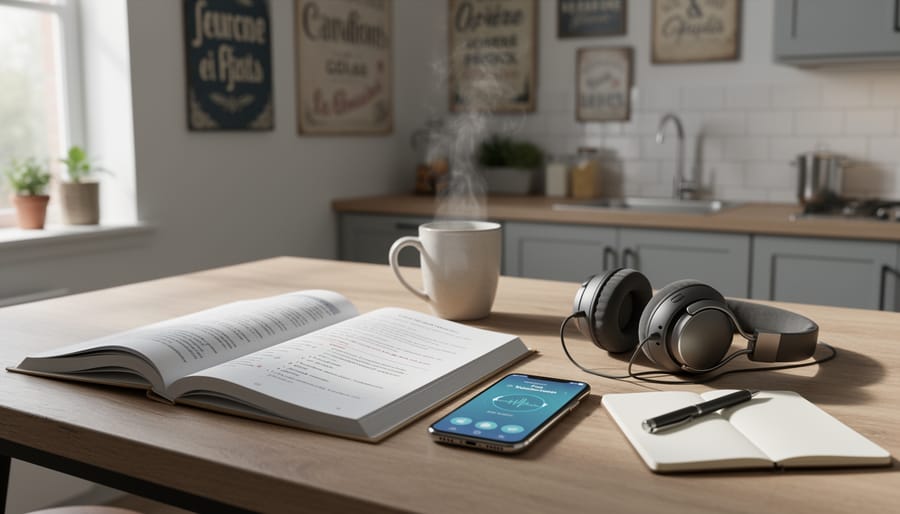
The right French language learning materials can make the difference between frustration and fluency. Most successful learners combine three types of resources: a structured textbook or course for grammar foundations, immersive audio or video content for listening comprehension, and interactive tools like apps or conversation exchanges for daily practice. The challenge isn’t finding materials (there are hundreds available in 2026), but choosing the ones that match your learning style, current level, and specific goals, whether you’re preparing for a bilingual job interview in Ottawa or planning to connect with family in Québec.
Canadian learners have distinct advantages and needs. You’re surrounded by French signage, bilingual packaging, and regional media, which means your materials should complement real-world exposure rather than replace it. The best approach treats learning materials as scaffolding: they support your progress while you build confidence through actual use.
This guide walks you through the key factors that separate effective materials from pretty distractions, compares the major categories (from traditional textbooks to AI-powered apps), and offers stage-specific recommendations so you’re not wasting money on resources you’ll outgrow in weeks or find too advanced to use. You’ll also learn the common purchasing mistakes that leave materials gathering dust on shelves.
Your investment in French learning materials should feel empowering, not overwhelming. Let’s find what actually works for where you are right now.
Understanding Your French Learning Goals and Level
Before investing in any French learning materials, you need a clear picture of where you stand and where you want to go. This self-assessment saves you from buying resources that are either too basic or frustratingly advanced, and ensures your materials actually serve your specific purposes.
Start by honestly evaluating your current proficiency level. If you’re just beginning, you’ll need materials that introduce fundamental grammar patterns, essential vocabulary, and pronunciation basics without assuming any prior knowledge. Intermediate learners require resources that build on existing foundations, introducing more complex sentence structures and expanding vocabulary into specialized areas. Advanced learners benefit from materials that refine nuance, explore idiomatic expressions, and engage with sophisticated content like literature or professional discourse.
Your learning objectives matter just as much as your level. Someone preparing for a business meeting in Montreal needs different materials than someone planning to read French novels or a student studying for university entrance exams. Conversational fluency demands heavy emphasis on listening and speaking practice with realistic dialogues. Business French requires specialized vocabulary, formal writing conventions, and professional communication patterns. Cultural immersion learners should prioritize authentic media, regional content, and materials reflecting Francophone Canadian life. Exam preparation calls for test-specific practice materials aligned with formats like TEF Canada or DELF.
The beauty of personalized learning is that you control the path. A professional aiming for workplace fluency might combine business-focused textbooks with Quebec French podcasts, while a retiree exploring French cinema would select entirely different resources. Matching materials to both your level and your why transforms learning from generic study into purposeful progress that keeps you engaged and motivated.
Key Factors to Consider When Choosing French Learning Materials
Learning Style and Format Preferences
Understanding your preferences helps narrow your material choices, though research shows that strictly matching materials to a supposed “learning styles myth debunked” doesn’t improve outcomes. What matters more is using varied materials that engage you in different ways.
If you find yourself drawn to charts, infographics, and color-coded notes, visual materials like illustrated textbooks, video lessons with subtitles, and apps with graphic interfaces will keep you engaged. Auditory learners often prefer podcasts, audiobooks, and conversation-focused platforms where listening and speaking take center stage. Those who learn best by doing, kinesthetic learners, benefit from interactive apps, role-playing scenarios, and materials that involve physical movement or hands-on practice. Meanwhile, reading/writing learners thrive with traditional textbooks, written exercises, and journaling in French.
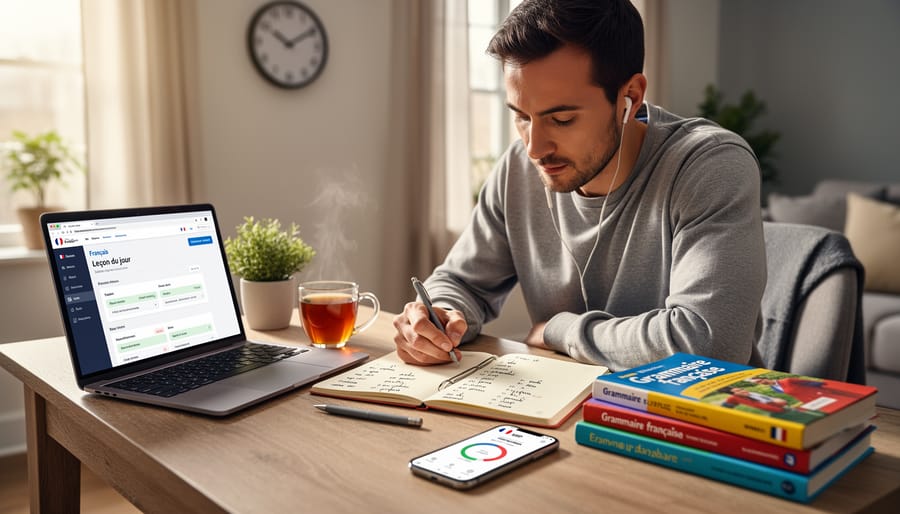
The digital-versus-physical debate comes down to convenience and personal comfort. Digital materials offer portability, searchability, and often multimedia integration, you can study anywhere with your phone or tablet. They’re ideal for busy Canadians commuting or traveling. Physical books and workbooks provide tactile engagement, fewer distractions, and easier annotation. Many learners find that handwriting notes in a physical workbook improves retention.
The sweet spot? Combine formats. Use a textbook for structured grammar study, a podcast for your commute, and an app for daily vocabulary practice. Mixing approaches keeps learning fresh and addresses the reality that effective language acquisition requires multiple modes of input and practice, not strict adherence to a single style.
Content Quality and Pedagogical Approach
The quality of your learning materials directly impacts how efficiently you’ll progress in French. Effective resources should explain grammar concepts clearly, breaking down rules into digestible chunks with concrete examples. Look for materials that connect grammatical structures to real communication rather than presenting isolated rules to memorize.
Vocabulary building should feel systematic yet natural. Strong materials introduce words in thematic groups or contextual families, not random lists. They should provide multiple exposures to new terms through varied exercises and review mechanisms that reinforce retention.
Cultural context matters enormously. Materials that integrate authentic cultural elements, how French speakers actually communicate, regional differences, social conventions, help you understand not just what to say but when and why. This cultural dimension makes language learning meaningful rather than purely mechanical.
Authentic content from native speakers (dialogues, texts, audio recordings) exposes you to real language use, including natural speech patterns, colloquialisms, and pronunciation variations. Materials that rely solely on simplified or artificial examples limit your ability to understand genuine French communication.
Progressive difficulty levels ensure you’re challenged without becoming overwhelmed. Quality resources build logically from foundational concepts to complex structures, recycling previous material while introducing new elements. Each lesson should feel like a manageable step forward, not a frustrating leap. Materials that clearly indicate proficiency levels help you gauge whether they match your current abilities and goals.
Canadian French Context and Cultural Relevance
For Canadian learners, the distinction between European and Canadian French matters more than you might think. While the languages share the same foundation, Québécois and other Canadian French varieties differ significantly in pronunciation, vocabulary, and expressions. Learning materials focused exclusively on Parisian French can leave you unprepared for real conversations in Montreal, Ottawa, or Moncton.
Materials that incorporate Canadian French help you recognize regional accents, understand local idioms (like “déjeuner” meaning lunch in Quebec versus breakfast in France), and navigate cultural references relevant to your daily life. This isn’t about choosing one variety over another, it’s about learning the French you’ll actually encounter in your community.
Look for resources that acknowledge these differences explicitly. Some textbooks include Canadian vocabulary sections, while certain apps offer Quebec French pronunciation options. Audio materials featuring Canadian speakers prove especially valuable for training your ear to local speech patterns. If your goal involves living, working, or connecting with Francophone communities in Canada, materials with strong Canadian content will accelerate your practical fluency and cultural confidence far more effectively than generic French resources.
Budget and Value Considerations
French learning materials span an enormous price range, from completely free resources to premium programs costing hundreds of dollars. Understanding this landscape helps you invest wisely.
Free resources like government-funded platforms (many Canadian provinces offer these), YouTube channels, podcasts, and library borrowing provide genuine value for motivated learners. They’re perfect for exploring French before committing financially or supplementing paid materials.
One-time purchases ($20-$80 for textbooks, $30-$150 for comprehensive courses) give you permanent access without ongoing costs. They work well for structured learners who complete what they buy.
Subscription services ($10-$30 monthly) offer constantly updated content and interactive features but require sustained commitment to justify the cost. Calculate the annual expense, $120-$360 adds up.
Assess value by examining what you actually use. A $50 textbook you work through completely beats a $200 program you abandon. Consider cost per learning hour, content quality, and whether the material matches your style. Start with lower-cost options, identify what works for you, then invest more strategically. Mixing free and paid resources often delivers the best value.
Types of French Learning Materials Compared
Textbooks and Workbooks
Textbooks and workbooks remain the backbone of structured French learning, offering systematic progression through grammar concepts, vocabulary themes, and skill-building exercises. These print or PDF resources typically organize content into units that build on previous knowledge, making them ideal for learners who thrive with clear roadmaps and measurable milestones.
Quality textbooks explain grammatical rules in digestible chunks, provide plenty of practice exercises with answer keys, and include cultural notes that contextualize the language. Workbooks reinforce these lessons through repetition, verb conjugation drills, fill-in-the-blank sentences, translation exercises. This methodical approach works exceptionally well for beginners establishing foundational grammar and for self-directed learners who want comprehensive reference materials they can revisit.
The main limitations? Textbooks can feel dry without supplementary audio for pronunciation, and they rarely capture the spontaneity of real conversation. They work best when paired with listening resources and speaking practice. For Canadian learners, seek textbooks that acknowledge Québécois vocabulary and expressions alongside standard French, ensuring relevance to your local linguistic environment.
Digital Apps and Online Platforms
Digital platforms have revolutionized French learning by making practice accessible anywhere, anytime. These interactive French tools use spaced repetition, instant feedback, and adaptive algorithms to personalize your experience based on performance.
Apps like Duolingo and Babbel gamify lessons with points, streaks, and progress tracking, great for building daily habits. Premium platforms such as Rocket French and Lingopie offer deeper content with video lessons, pronunciation analysis, and cultural modules. Many include speech recognition to refine your accent, something textbooks can’t provide.
The flexibility suits busy Canadians: squeeze in five minutes during your commute or dedicate an hour on weekends. Most digital learning apps offer free versions with limited content, then charge $10-30 monthly for full access. Consider the subscription model before committing, costs add up over years of study.
However, apps work best as supplements rather than standalone solutions. They excel at vocabulary drills and grammar reinforcement but often lack the depth for true fluency or nuanced cultural understanding.
Audio and Video Resources
Audio and video resources immerse you in real French speech patterns, helping you develop listening skills and natural pronunciation that textbooks can’t replicate. Podcasts offer portable learning, you can listen during commutes or while doing chores. Look for shows designed for learners (like “InnerFrench” or “Coffee Break French”) that speak slowly at first, gradually building speed. YouTube channels provide visual context that aids comprehension, making it easier to follow conversations and see how native speakers use gestures and expressions.
Audiobooks work well for intermediate learners ready to absorb longer narratives. Start with children’s stories or young adult novels before tackling adult literature. French-language news websites often include video content, CBC’s French-language section and Radio-Canada deliver authentic Canadian French in realistic contexts.
The biggest advantage? You’ll train your ear to recognize different accents, speeds, and regional variations. Choose materials slightly above your current level to challenge yourself without causing frustration. Mix structured lessons with authentic content like French music, films, or documentaries to keep learning engaging while exposing yourself to how people actually speak.
Reading Materials (Books, Magazines, News)
Reading offers a powerful way to expand your French vocabulary and deepen comprehension while exposing you to natural sentence structures and cultural context. The key is matching material difficulty to your current level to maintain motivation without overwhelming yourself.
Graded readers are specially designed books with controlled vocabulary and simplified grammar, ideal for beginners and intermediate learners. They let you enjoy complete stories while reinforcing what you’ve learned. As you progress, transition to authentic French literature, start with contemporary novels or young adult fiction before tackling literary classics like Camus or Proust.
French magazines and newspapers provide current, practical vocabulary. Canadian publications like *Le Devoir* or *L’actualité* offer culturally relevant content with Québécois perspectives. Online news sites such as Radio-Canada give you adjustable reading practice, articles range from brief news items to in-depth features.
Consider your interests when choosing: cooking magazines, sports journalism, or technology blogs all teach French while engaging you with topics you genuinely care about, making consistent reading habits easier to maintain.
Conversation and Speaking Practice Tools
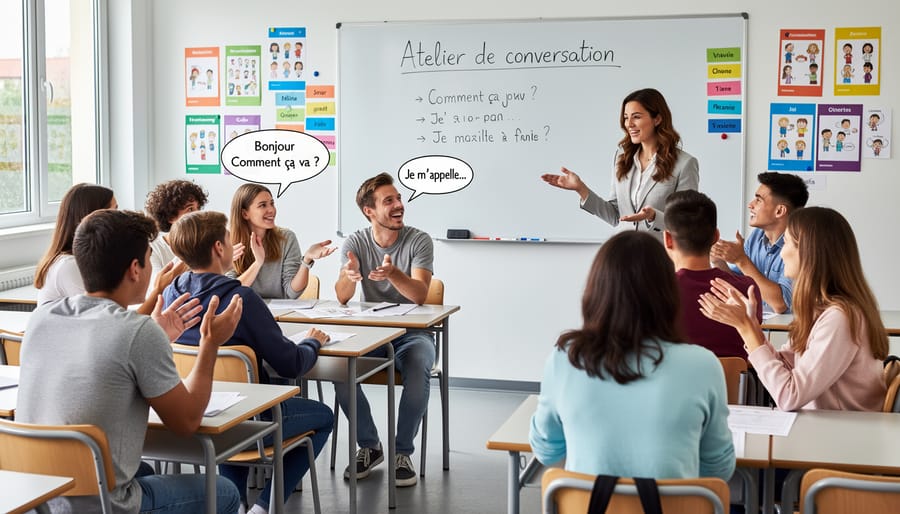
Building conversational confidence requires regular speaking practice, but finding opportunities to use French actively can be challenging for Canadian learners. Language exchange platforms like HelloTalk and Tandem connect you with native French speakers who want to practice English, creating mutually beneficial conversation partnerships. These apps typically include text correction, voice messaging, and video call features that let you practice at your own pace.
Dedicated speaking apps such as Speechling and Elsa Speak focus specifically on pronunciation feedback, using voice recognition technology to identify areas needing improvement. While they can’t replace human interaction, they provide judgment-free environments for practicing difficult sounds and building muscle memory for French pronunciation patterns.
Flashcard systems like Anki with audio components help reinforce vocabulary recall for active use rather than passive recognition. The most effective speaking practice tools combine these approaches: vocabulary building through flashcards, pronunciation refinement through apps, and real conversational experience through language exchange. Canadian learners benefit particularly from seeking Québécois conversation partners to familiarize themselves with local expressions and pronunciation patterns that differ from European French.
Reference Materials (Dictionaries, Grammar Guides)
Reference materials serve as your safety net during French study sessions. When you encounter an unfamiliar word or can’t remember how to conjugate a verb, these resources provide quick, reliable answers that keep your learning momentum going.
A good bilingual dictionary is non-negotiable. For Canadian learners, look for dictionaries that include both European and Québécois French variants, noting regional differences in vocabulary and usage. Digital dictionaries like WordReference or Linguee offer example sentences showing words in context, which helps you understand nuance better than simple translations. Collins Robert remains the gold standard for comprehensive print dictionaries.
Grammar reference guides differ from textbooks, they’re designed for targeted lookups, not sequential reading. Choose one with clear indexing so you can quickly find specific topics: subjunctive triggers, pronoun placement, or past participle agreement. Bescherelle’s verb conjugation guides are legendary among French learners, providing complete conjugation tables for every tense.
Verb conjugators, whether apps or physical charts, eliminate guesswork during writing practice. Keep these references within arm’s reach during study sessions rather than treating them as separate learning tools.
Recommended Materials for Different Learning Stages
Materials for Beginners (A1-A2)
At the A1-A2 level, your priority is building a solid foundation in pronunciation, basic grammar structures, and everyday vocabulary. Start with a beginner-friendly textbook like *Grammaire progressive du français* (niveau débutant), which presents grammar concepts in digestible chunks with plenty of exercises. Pair this with an app such as Duolingo or Babbel for daily reinforcement, these platforms excel at introducing core vocabulary through repetition and simple sentence construction.
For pronunciation, invest in audio resources early. The *Phonétique progressive du français* book with accompanying audio files will help you master French sounds, liaisons, and intonation patterns. Supplement with beginner podcasts like *InnerFrench* (Beginner episodes) or *Coffee Break French*, which speak slowly and clearly while explaining key phrases.
Don’t overlook children’s books and graded readers designed for A1-A2 learners. Series like *Lire en français facile* offer engaging stories with controlled vocabulary, letting you practice reading without frustration. Finally, flashcard apps like Anki or Quizlet help cement the 1,000-2,000 most common French words, your vocabulary bedrock at this stage.
Materials for Intermediate Learners (B1-B2)
At the intermediate level, your French learning materials should push you beyond formulaic phrases and into the messy, wonderful reality of how French speakers actually communicate. This is where you transition from controlled exercises to authentic content that challenges your comprehension and expands your expressive range.
Quality intermediate textbooks like “Édito B1/B2” or “Saison” introduce the subjunctive mood, conditional constructions, and relative pronouns through contextualized activities rather than mechanical drills. Look for materials that explain when and why native speakers choose certain structures, not just how to conjugate them.
Authentic content becomes essential now. Start with scripted podcasts such as “InnerFrench” or “Français Authentique” that use natural speech patterns but maintain clear pronunciation. Gradually add Quebec media like Radio-Canada podcasts or “Tout le monde en parle” episodes to tune your ear to Canadian French rhythms and vocabulary.
Graded readers at B1-B2 level offer literature adapted to your vocabulary range while maintaining narrative complexity. Titles from collections like “Lire en français facile” bridge the gap between learner content and unmodified novels.
Invest in a comprehensive verb reference book and consider subscription access to news sources like Le Devoir or L’actualité to build current-affairs vocabulary relevant to Canadian contexts.
Materials for Advanced Learners (C1-C2)
At the advanced level, your focus shifts from mastering mechanics to achieving precision, nuance, and cultural fluency. You need materials that challenge your expression and expose you to sophisticated French in authentic contexts.
Immerse yourself in contemporary French literature, novels by authors like Dany Laferrière or Kim Thúy offer both literary merit and Canadian perspectives. Explore specialized reading in your professional field, whether medical journals, legal texts, or technical publications entirely in French.
Subscribe to Le Devoir, L’actualité, or watch Radio-Canada documentaries to engage with complex current affairs and regional debates. Advanced podcasts like “Les années lumière” (science) or “Plus on est de fous, plus on lit!” (literature) develop your comprehension of rapid, natural speech with cultural references.
For vocabulary expansion, work with context-specific dictionaries (law, medicine, business) and synonym resources like Le Grand Robert. Practice nuanced writing through translation exercises, essay composition, or maintaining a French journal.
Consider materials exploring Québécois idioms, joual expressions, and regional linguistic variations to truly master Canadian French in all its richness.
Common Mistakes to Avoid When Buying French Learning Materials
Even well-intentioned learners make predictable errors when shopping for French resources. Recognizing these mistakes ahead of time can save you hundreds of dollars and months of frustration.
Buying too many resources at once is the single most common trap. When you’re excited about learning French, it’s tempting to purchase three textbooks, subscribe to two apps, and order a stack of graded readers all in the same week. The result? You feel overwhelmed, jump between materials without completing any, and never develop the consistent routine that actually builds fluency. Start with one primary resource and one supplementary tool, then expand only after you’ve established a regular study habit with those.
Ignoring your actual learning style leads to abandoned resources. If you’re a highly visual, hands-on learner, an audio-only podcast subscription won’t keep you engaged no matter how well-reviewed it is. Be honest about how you prefer to absorb information rather than forcing yourself to use materials that feel like a chore.
Choosing European French materials when you live in Canada creates unnecessary confusion. While the languages are mutually intelligible, vocabulary differences, pronunciation variations, and cultural references matter for daily life. A textbook teaching you to say “quatre-vingts” when Québécois commonly use “octante” in some contexts, or restaurant dialogues set in Paris bistros rather than Montreal cafés, adds friction to your learning. Seek materials that reflect Canadian French reality when possible.
Prioritizing free over effective seems budget-smart but often backfires. Free resources absolutely have their place, but cobbling together a curriculum from random YouTube videos and blog posts lacks the structure beginners need. Investing in one solid paid resource provides clear progression, vetted content, and comprehensive coverage that fragmented free materials rarely match.
Buying materials far above your current level because they look impressive wastes money and damages confidence. That advanced literature anthology or C1-level news subscription will sit unused if you’re still working through present tense conjugations. Match materials to where you are now, not where you wish you were.
Neglecting to check return policies and trial periods means getting stuck with incompatible materials. Many publishers and platforms offer money-back guarantees or trial periods specifically so you can test fit before fully committing.
Making the Most of Your Learning Materials
Buying quality materials is just the beginning, how you use them determines your success. A structured approach helps you extract maximum value from your investment and maintain momentum through the inevitable plateaus.
Start by creating a realistic study schedule that fits your life. Consistency matters more than duration, fifteen minutes every morning with your textbook and audio materials builds stronger habits than sporadic two-hour sessions. Block specific times in your calendar and treat them as non-negotiable appointments with yourself.
Combine different resource types to engage multiple skills simultaneously. Pair your textbook grammar study with podcast listening for the same topic, then practice the vocabulary through flashcards and attempt a writing exercise. This multi-modal approach reinforces learning and prevents boredom. Interactive tools can transform your learning by connecting these elements in engaging ways.
Track your progress visibly. Maintain a simple log of chapters completed, vocabulary mastered, or listening hours accumulated. Seeing your advancement motivates continued effort, especially during frustrating periods when fluency feels distant. Note which materials work best for you, double down on effective resources rather than collecting more.
Review strategically. French requires spaced repetition, revisit previous lessons every few weeks, even as you advance to new content. Don’t abandon beginner materials once you reach intermediate level; reviewing foundations strengthens accuracy and confidence. Set monthly goals, but forgive yourself for occasional missed days. Learning French is a marathon, and sustainable pacing ensures you reach the finish line.
Frequently Asked Questions
Choosing the right French learning materials often raises specific questions, especially for Canadian learners navigating between European and Québécois French or balancing budget with quality. Here are answers to the most common concerns.
Should I focus on Québécois French or European French materials?
If you’re learning French primarily for use in Canada, prioritize materials that include Québécois vocabulary, pronunciation, and cultural context, though a foundation in standard French works for both. Many successful learners use primarily standard French resources and supplement with Québécois-specific content through podcasts, YouTube channels, or local media.
Are free materials good enough, or should I invest in paid resources?
Free resources can absolutely work for motivated learners, particularly when combined strategically, free apps for daily practice, YouTube for listening comprehension, and library books for reading. Paid materials typically offer structured progression, clearer explanations, and better organization, which many learners find worth the investment for faster progress and less guesswork.
How many different materials should I use at once?
Start with 2-3 complementary materials rather than overwhelming yourself with too many options. A good combination includes one structured core resource (textbook or comprehensive app), one material for listening practice (podcast or video series), and one for vocabulary building (flashcards or reading material).
What learning materials work best for Canadian French specifically?
Look for resources produced in Quebec or by Canadian publishers, podcasts featuring Québécois speakers, and apps with Canadian French audio options. CBC Radio-Canada offers excellent authentic listening materials, and many Quebec-produced textbooks address local expressions and cultural references that European materials omit.
These questions reflect concerns most Canadian learners face when starting their French journey. The key is matching materials to your specific situation rather than searching for a perfect universal solution. Your location, goals, and learning preferences matter more than finding resources everyone else recommends.
What works brilliantly for one learner might frustrate another, so give new materials a fair trial of two to three weeks before deciding whether they suit your needs. You’ll quickly develop a sense of which formats keep you engaged and which feel like a chore.
Choosing the right French language learning materials isn’t about finding the single perfect resource, it’s about selecting tools that match your unique goals, learning style, and current proficiency level. As we’ve explored throughout this guide, the most effective approach combines understanding what you need with thoughtful evaluation of how different materials serve those needs.
Start small rather than overwhelming yourself with every resource available. Pick one or two materials that address your immediate priorities, whether that’s building conversational confidence, mastering grammar fundamentals, or immersing yourself in Francophone culture. Use them consistently for several weeks, then assess what’s working and where you might need additional support. This gradual expansion lets you build a personalized learning ecosystem without wasted money or scattered focus.
Remember that self-study materials, however excellent, work best when complemented by human interaction and expert guidance. Personalized instruction helps you apply what you’re learning, receive feedback on your progress, and stay motivated through challenges. Combining quality materials with structured teaching creates a powerful foundation for genuine fluency.
Learning French opens doors to rich cultural experiences, professional opportunities, and deeper connections within Canada’s vibrant Francophone communities. The materials you choose today are investments in those future possibilities. Trust your instincts, stay curious, and remember that every French learner started exactly where you are now. Bonne chance dans votre apprentissage!