
What Is Personality in Psychology (and How Does It Work)?

Personality for psychology refers to the enduring patterns of thoughts, emotions, and behaviors that define how individuals differ from one another and respond to their environment. These patterns form the core of what psychologists study when they examine why people act the way they do, how early experiences shape long-term traits, and what makes each person’s psychological makeup unique. Understanding personality isn’t just an academic exercise. It drives clinical assessments, workplace hiring decisions, relationship counseling, and therapeutic interventions across Canada and worldwide.
For psychology students and professionals, personality represents one of the discipline’s most practical and far-reaching areas. Whether you’re learning to administer personality assessments, interpreting trait profiles for clients, or researching how personality influences mental health outcomes, you need a solid grasp of the theoretical frameworks that have shaped the field. From Freud’s psychoanalytic model to the Five-Factor Model that dominates contemporary research, each approach offers different lenses for understanding human nature.
This article breaks down what personality means in psychological terms, how researchers and practitioners study it, and the major theoretical models you’ll encounter in your coursework or clinical work. You’ll also see how personality psychology applies in real-world settings, from therapy rooms to organizational development. If you’re preparing for exams, building assessment skills, or simply want to understand how personality science informs practice in 2026, you’ll find clear explanations of the core concepts, measurement tools, and applications that define this dynamic field.
What Personality Means in Psychology

In psychology, personality refers to the unique and relatively stable patterns of thoughts, emotions, and behaviors that make each person distinctive. It’s the consistent way you process information, respond to situations, and interact with the world around you, patterns that remain recognizable whether you’re at work, with friends, or navigating new experiences.
Psychologists define personality as enduring rather than fleeting. Your personality shapes how you typically approach challenges, form relationships, and make decisions. These patterns emerge early in life and tend to remain consistent across different contexts and over time, though they can evolve gradually through experiences and intentional development.
To measure personality, psychologists rely on validated assessment tools including standardized questionnaires, structured interviews, and behavioral observations. The most common approach involves self-report inventories where individuals rate themselves on various traits and tendencies. Researchers also use peer ratings, behavioral tasks, and longitudinal studies to track personality expression across situations and years.
Understanding what personality truly means requires distinguishing it from related concepts that people often confuse:
- Personality vs. Temperament
- Temperament refers to the biologically-based emotional and behavioral tendencies present from infancy, such as activity level and emotional reactivity. Personality encompasses temperament but also includes learned patterns, cognitive styles, and motivations that develop through experience.
- Personality vs. Character
- Character focuses specifically on moral and ethical dimensions, your values, integrity, and how you distinguish right from wrong. Personality is broader, including all psychological patterns regardless of their moral content.
- Personality vs. Mood States
- Moods are temporary emotional states that fluctuate throughout the day or week in response to circumstances. Personality represents stable tendencies that persist across moods and situations.
Personality psychology has gained momentum as an area of study because it offers practical insights into human behavior that matter in clinical settings, workplaces, educational environments, and personal development. As psychology professionals and students seek evidence-based frameworks for understanding individual differences, personality research provides tools to predict behavior, tailor interventions, and support people in contexts ranging from therapy to career counseling.
Core Components of Personality
Personality psychology breaks down the complex phenomenon of human individuality into several interconnected components, each contributing to the unique psychological profile that defines a person. These building blocks work together rather than in isolation, creating the stable patterns we recognize as someone’s personality.
Traits form the foundation of personality structure. These are enduring tendencies to think, feel, and behave in consistent ways across different situations and over time. A trait like conscientiousness, for example, influences how someone approaches work tasks, manages personal responsibilities, and plans for the future. Psychologists measure traits along continuums rather than as all-or-nothing categories, recognizing that people vary in degree rather than kind.
Behavioral patterns represent the observable expressions of personality. These are the recurring ways people respond to situations, interact with others, and navigate their environment. While behavior can vary with context, personality researchers focus on identifying the consistent patterns that emerge across multiple settings and timeframes.
Cognitive processes encompass how individuals perceive, interpret, and make sense of their experiences. This includes thinking styles, problem-solving approaches, attention patterns, and the mental schemas people use to organize information. Someone’s cognitive style shapes everything from how they learn new material to how they evaluate risks and opportunities.
Emotional responses constitute another vital component. This includes both emotional tendencies (how readily someone experiences different emotions) and emotional regulation strategies (how they manage and express those feelings). Some people experience intense emotional reactions while others remain more even-tempered, and these patterns significantly influence daily functioning.
The key components that psychologists study include:
- Personality traits: enduring tendencies like extraversion, agreeableness, and openness to experience
- Behavioral patterns: consistent ways of acting across situations and relationships
- Cognitive styles: characteristic approaches to thinking, learning, and problem-solving
- Emotional tendencies: typical patterns in experiencing and regulating emotions
- Motivational drivers: core needs, values, and goals that direct behavior
- Interpersonal patterns: recurring ways of relating to and interacting with others
These components don’t function independently. A person’s traits influence their behavioral patterns, cognitive processes shape emotional responses, and motivational drivers interact with all these elements to produce coherent personality functioning. This integration creates the stability and predictability that allows us to recognize someone’s personality across different contexts while still allowing for situational flexibility and personal growth over time.
How Personality Psychology Works

Personality psychologists employ multiple research methods to capture the complexity of human personality. The field relies on both quantitative and qualitative approaches, each offering different insights into how personality manifests and develops over time.
Standardized self-report questionnaires remain the most widely used assessment tools. These instruments ask individuals to rate themselves on statements or questions, producing numerical scores across various personality dimensions. The Five-Factor Model inventories, for example, measure traits like openness and conscientiousness through carefully validated questions. While efficient and statistically reliable, self-report measures depend on honest responses and self-awareness, which can vary considerably between individuals.
Clinical interviews provide richer qualitative data through structured or semi-structured conversations. Psychologists trained in interview techniques explore personality patterns by asking about thoughts, feelings, behaviors, and life experiences. These sessions can reveal nuances that questionnaires miss, particularly when exploring personality disorders or complex psychological dynamics. What is psychoanalysis offers one framework for understanding how these interview methods evolved from therapeutic practice into research tools.
Behavioral observation involves watching and recording how people actually behave in controlled settings or natural environments. Researchers might observe social interactions, problem-solving approaches, or emotional reactions to specific situations. This method grounds personality assessment in observable actions rather than self-perception, though it requires significant time and trained observers to code behaviors reliably.
Longitudinal studies track the same individuals across months or years, revealing whether personality traits remain stable or shift over time. These studies help researchers understand which aspects of personality are enduring and which respond to life experiences, aging, or intervention. Canadian universities often contribute to international longitudinal projects, adding cross-cultural perspectives to personality research.
Together, these methods create a comprehensive understanding of personality that balances scientific rigor with real-world applicability.
Major Frameworks for Understanding Personality
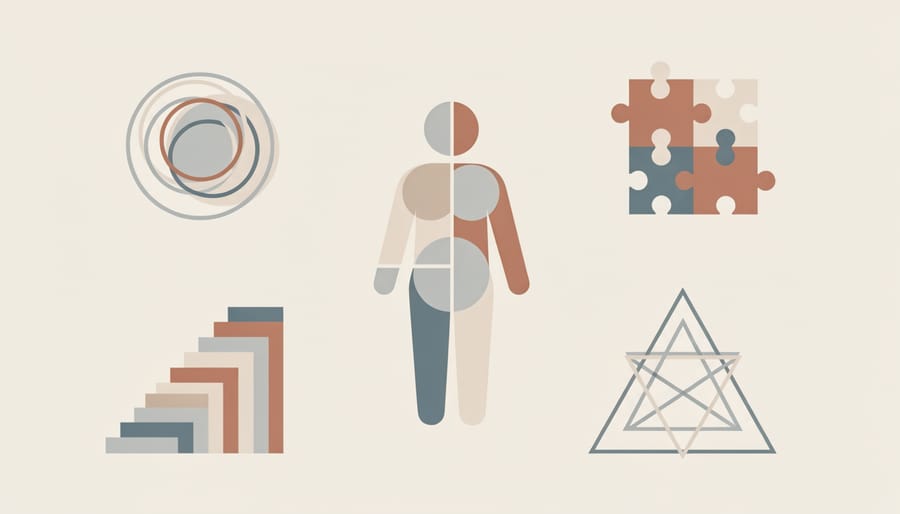
Psychologists have developed several major frameworks to understand personality, each offering a distinct lens through which to view how individuals develop their characteristic patterns of thinking, feeling, and behaving. These theoretical approaches aren’t mutually exclusive, many researchers and practitioners draw on multiple perspectives to gain a fuller picture of human personality.
The psychodynamic approach, originating with Sigmund Freud and expanded by later theorists like Carl Jung and Alfred Adler, views personality as shaped by unconscious forces and early childhood experiences. This framework emphasizes internal conflicts, defense mechanisms, and the role of the unconscious mind in driving behavior. While modern psychology has moved beyond some of Freud’s specific claims, the psychodynamic perspective’s attention to early development and unconscious processes remains influential in clinical work.
Trait theory takes a more empirical approach, identifying and measuring stable personality characteristics that remain relatively consistent across situations and time. The most widely accepted model today is the Big Five (also called the Five-Factor Model), which describes personality through five broad dimensions: openness to experience, conscientiousness, extraversion, agreeableness, and neuroticism. This framework offers a practical, research-backed way to describe and predict behavior, making it popular in both academic research and workplace assessment.
The humanistic perspective, championed by Carl Rogers and Abraham Maslow, focuses on personal growth, self-actualization, and the inherent drive toward fulfilling one’s potential. This approach emphasizes conscious experience, free will, and the importance of self-concept in shaping personality. It’s particularly influential in counseling and therapeutic contexts where the focus is on helping individuals develop their authentic selves.
Social-cognitive theory examines how personality emerges from the interaction between individual thoughts, environmental factors, and behavior. This framework, developed by researchers like Albert Bandura, highlights the role of learning, observation, and cognitive processes in personality development. It explains how people’s beliefs about themselves and their environment shape their actions and personal characteristics.
The biological perspective explores the genetic, neurological, and physiological foundations of personality. Research in this area examines how brain structure, neurotransmitter systems, and heredity contribute to personality traits. Twin studies and neuroimaging research have revealed that many personality characteristics have a significant genetic component, though environment still plays a crucial role in how these predispositions manifest.
Practical Applications of Personality Psychology
Personality psychology extends far beyond academic theory into tangible, everyday applications that improve individual well-being and organizational effectiveness. Mental health professionals rely on personality assessments to tailor therapeutic approaches, using frameworks like the Big Five to identify clients’ unique patterns of anxiety, resilience, and interpersonal functioning. A therapist might adjust treatment protocols based on whether a client scores high in neuroticism or low in openness, creating interventions that align with their natural tendencies rather than fighting against them.
In workplace settings, personality assessments guide hiring decisions, team composition, and leadership development. Organizations use validated instruments to match candidates to roles where their traits will thrive, placing detail-oriented individuals in analytical positions and extroverts in client-facing roles. Team-building exercises incorporate personality profiles to reduce conflict and improve communication, helping colleagues understand why their coworker prefers written instructions over verbal updates or needs time alone to recharge. Career counselors employ these same tools to steer individuals toward professions that fit their personality structure, potentially preventing burnout and increasing job satisfaction over decades-long careers.
The applications span multiple domains:
- Clinical therapy: personalizing cognitive-behavioral interventions, predicting treatment response, identifying mental health risks
- Workplace assessment: recruitment screening, leadership training, conflict resolution strategies
- Educational settings: adapting instruction methods to student temperaments, addressing behavioral challenges
- Relationship counseling: improving communication between partners with different personality profiles
- Personal development: self-awareness exercises, goal-setting aligned with natural strengths
Educational psychologists apply personality insights when designing curriculum and managing classroom dynamics. Understanding that introverted students process information differently from extroverts allows for varied instruction methods, something educators discovered when teaching through a mask required new awareness of how personality shapes learning needs. At the individual level, people use personality frameworks for self-understanding, identifying why certain situations drain their energy or which goals align with their core values rather than external expectations.
Personality Psychology in Canada Today
Canada’s personality psychology community is growing through university research programs, professional associations, and increasing opportunities for students and practitioners to deepen their expertise. Major universities across the country conduct personality research and offer programs that help learners develop beginner skills in psychological assessment and advance to intermediate learning in personality theory and measurement. Professional development continues through workshops, certification programs, and academic conferences. Montreal will host several psychology conferences in October 2026 and throughout 2027, including events focused on psychological and behavioral sciences. These gatherings provide venues for Canadian researchers to share findings, for practitioners to explore new assessment methods, and for students to connect with professionals working in personality psychology and related fields.
Frequently Asked Questions
Can I study personality psychology without a formal degree?
You can begin exploring personality psychology through online courses, books, and professional development workshops, though practicing as a personality psychologist typically requires graduate-level education and professional credentials. Many psychology professionals integrate personality assessment and theory into their existing practice through continuing education.
How long does it take to become proficient in personality assessment?
Basic competency in administering and interpreting common personality assessments typically requires several months of supervised training and practice. Developing deeper expertise in personality psychology, understanding multiple theoretical frameworks and applying them effectively, generally takes years of study and clinical or research experience.
Are personality traits fixed or can they change?
While core personality traits tend to remain relatively stable throughout adulthood, research shows that traits can shift gradually over time through life experiences, intentional effort, and therapeutic intervention. Understanding this balance between stability and change is central to modern personality psychology.
What’s the difference between personality psychology and clinical psychology?
Personality psychology focuses on understanding and measuring individual differences in typical patterns of thinking, feeling, and behaving across all people. Clinical psychology applies psychological principles, including personality theory, to diagnose and treat mental health conditions in individuals experiencing psychological distress.
Following this FAQ section, those interested in deepening their understanding of personality psychology have multiple pathways available. Whether you’re a psychology student seeking specialization, a professional looking to integrate personality assessment into your practice, or simply curious about human behavior, the field offers rich opportunities for learning and application in Canadian contexts and beyond.
Understanding personality psychology opens doors to deeper self-awareness and more effective work with others. Whether you’re a psychology student building foundational knowledge, a mental health professional refining your practice, or someone seeking insight into human behavior, the study of personality offers practical frameworks for understanding what makes each person unique.
The field continues to evolve through ongoing research and professional dialogue. If you’re looking to deepen your expertise, consider engaging with the broader psychology community through academic reading, professional development courses, or conferences. Montreal hosts several psychology gatherings in 2026 and 2027, including events focused on psychological and behavioral sciences scheduled for October 2026 and May 2027, providing opportunities to learn from current research and connect with peers in the field.
The more you explore personality psychology, the better equipped you’ll be to apply its insights, whether in clinical settings, workplace environments, educational contexts, or your own personal growth. The investment in understanding how personality works pays dividends in virtually every area of human interaction.